Cards, wristbands, keyfobs, and wearable formats can combine convenient access with a design suited to each location.
Access control is one of the most visible everyday uses of RFID. In a hotel, office, apartment, club, school, or leisure venue, the access product becomes part of the user’s experience from the moment it is issued. A card that works smoothly, a wristband that remains comfortable, or a keyfob that is easy to carry can make entry feel simple and dependable. When the format is poorly matched to the environment, small inconveniences are repeated every time a door, gate, locker, or controlled area is used.
Standard cards remain popular because they are familiar, easy to print, and convenient for temporary or permanent issue. They can carry room information, instructions, brand artwork, numbering, or a write-on area depending on the program. Wristbands are useful where users want hands-free access, especially in water parks, resorts, events, fitness centers, and family leisure settings. Keyfobs can be more durable for employees, residents, or members who carry the credential daily. Decorative epoxy, leather, wood, and shaped products add further choices where appearance and personalization are important.
The correct product is determined by the user’s journey. A hotel guest may carry a card for only a few days, while an employee may use the same credential for months. A visitor credential may need clear visual differentiation, and a waterproof wristband may need to remain secure during swimming or outdoor activity. Teams should consider issue and return processes, replacement frequency, cleaning, comfort, attachment, storage, expected service life, and the types of readers already installed before finalizing the format.
One Access Function, Many Product Formats
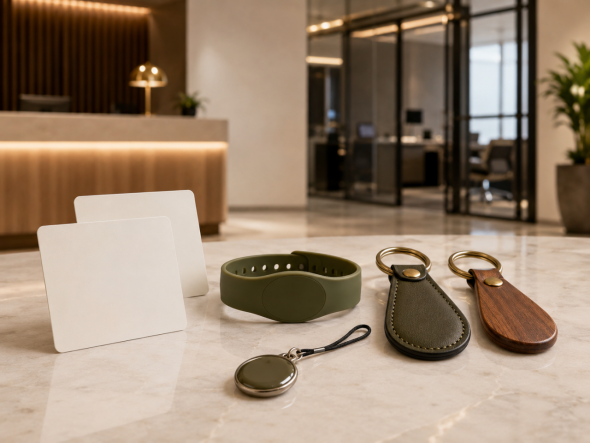
Customization is more than adding a logo. Size, thickness, color, surface finish, hole position, ring style, numbering, signature panel, barcode, magnetic feature, protective layer, and packaging can all affect how the product performs in daily use. Artwork should reserve important areas around holes, edges, and any required encoding zone. For premium hospitality programs, coordinated colors and materials can make the credential feel like part of the guest experience. For industrial workplaces, high visibility and clear role identification may be more important than decorative finishing.
Operational planning is equally important. Staff need a consistent process for issuing, activating, replacing, collecting, and retiring credentials. Lost items should be handled quickly, and temporary replacements should not create duplicate active records. Reusable products may need cleaning and inspection before reissue. Packaging and delivery should preserve batch order when credentials are assigned to rooms, departments, membership levels, or numbered sets. These steps help the access product remain a controlled operational tool rather than an isolated printed item.
A sample and compatibility review can prevent expensive problems. Buyers should confirm physical dimensions, material, print color, surface finish, reading performance, and interaction with the intended access system before mass production. A wristband should be tested for comfort and closure strength. A keyfob should be evaluated for ring durability and pocket use. A hotel card should be checked with the target lock and the planned encoding process. Representative testing is especially important when an unusual material or custom shape is selected.
Security depends on the wider access system and operating policy, not on the appearance of the credential alone. Permissions should follow the user’s role and time period, and inactive credentials should be removed promptly. Staff should know how to respond when an item is lost, when a guest changes rooms, or when an employee changes responsibilities. Visual design can support these controls by distinguishing temporary, staff, member, and guest products without displaying sensitive information. The access product should make the correct action easy for authorized users while the management process keeps issuance, updates, and cancellation under clear responsibility.
Chengdu Mind IOT Technology Co.,Ltd manufactures customizable RFID cards, silicone wristbands, keyfobs, epoxy products, wooden credentials, and other access formats. Projects can be developed around the intended system, environment, audience, artwork, and quantity. A well-chosen credential supports security while also making daily entry more comfortable and intuitive. By treating access products as part of the complete user journey, hotels, workplaces, and leisure venues can improve both operational control and the experience people have at every access point.
Post time: Aug-24-2026