RFID library management labels are helping modern libraries connect physical books with more organized circulation, inventory and collection-management workflows. Applied to individual books and other library materials, these labels can support faster identification, more convenient self-service and clearer visibility across daily library operations.
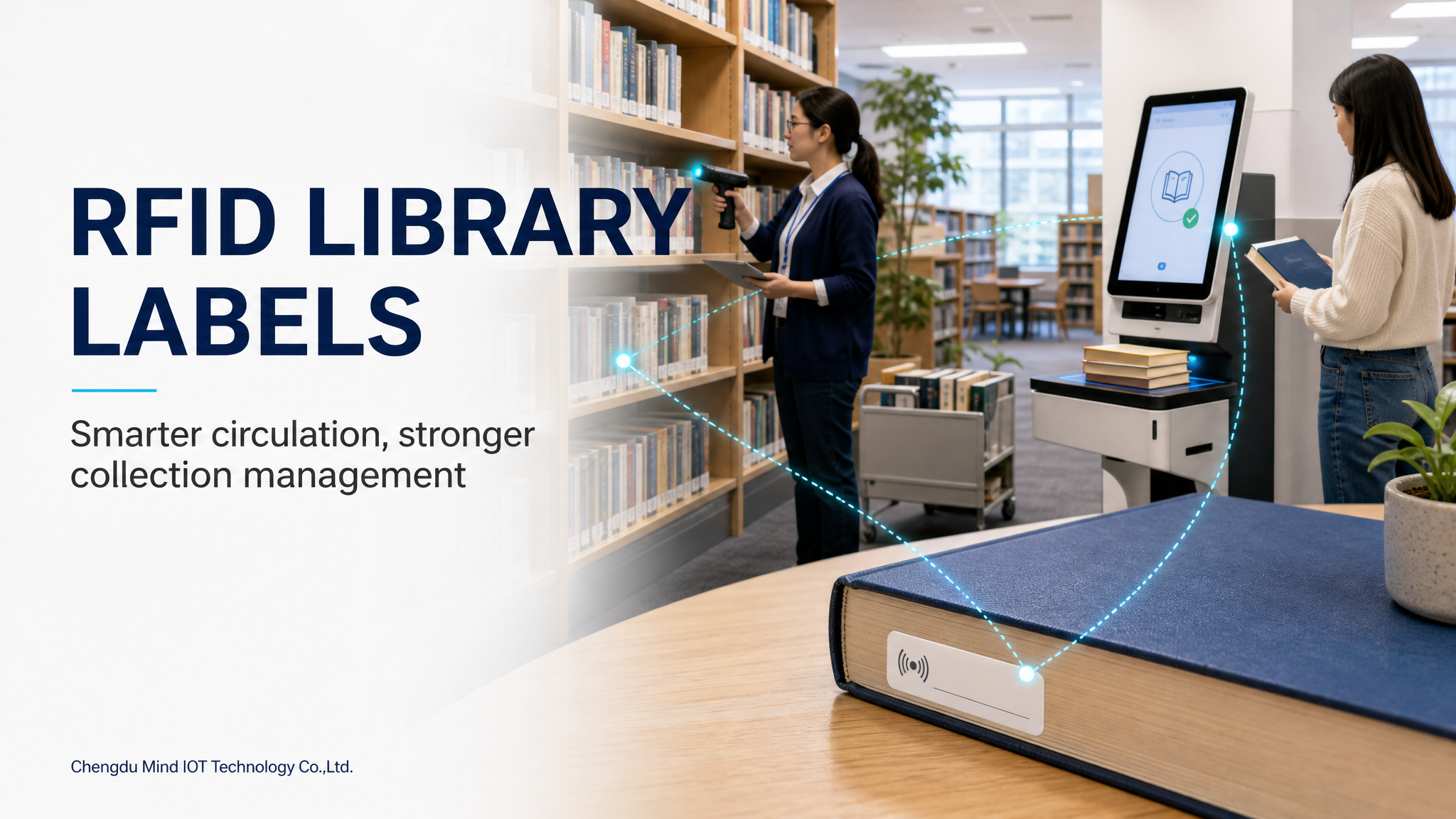
As libraries manage growing collections and serve readers who expect convenient access, staff need practical ways to identify, locate and update materials. RFID labels provide a machine-readable identity for each tagged item, allowing reading equipment and library software to associate a physical book with its catalog and circulation record.
Faster and more consistent book circulation
The circulation desk is one of the most visible places where RFID library labels can support daily service. When books are returned or checked out, staff can use RFID reading equipment to identify items and update their status within the library’s established system.
Because multiple tagged items can be identified within a suitable reading area, RFID can help simplify the handling of a group of books. This may support more efficient returns processing, reduce repetitive manual scanning and make it easier for staff to focus on reader assistance and exception handling.
The exact workflow depends on the library’s software, equipment and operating procedures. RFID labels are not a replacement for sound circulation policies; they provide an identification layer that can help those policies work more smoothly.
Supporting faster collection inventory
Collection inventory is essential for understanding what a library holds and whether materials are in their expected locations. Traditional shelf checks can require staff to handle books one by one and manually compare physical materials with catalog records.
With RFID labels, staff can use suitable handheld or fixed reading equipment to identify books on shelves or in designated areas. This can help libraries conduct inventory checks more systematically, review missing or misplaced materials and maintain a clearer connection between physical collections and digital records.
An RFID-supported inventory process can also help staff prioritize follow-up work. Instead of treating every shelf check as a fully manual task, the library can use identification results to focus attention on materials that require further review.
Helping staff locate books and reduce misplacement
A book may be listed in the catalog but still be difficult to find if it has been placed on the wrong shelf, left in a processing area or returned to an incorrect location. RFID identification can assist staff in locating materials during shelf reading and collection maintenance.
When a tagged book is detected in a reading area, its identity can be associated with the library’s records. This can help staff investigate whether the book is in the correct section, identify items that need reshelving and improve the accuracy of location-related information.
The technology does not eliminate the need for proper shelving practices. Rather, it gives library teams another practical tool for identifying exceptions and maintaining an orderly collection.
Supporting security and loss-prevention procedures
Libraries also need to protect their collections while keeping access convenient for readers. RFID labels can work as part of a broader security-management process by linking a book’s identity and circulation status to the library’s established control procedures.
At library exits or other designated points, suitable systems may help identify materials that have not been properly checked out or whose status requires attention. This can support staff response and provide an additional layer of collection protection.
Security management should be designed around the library’s policies, reader privacy requirements and local operating conditions. RFID labels support identification and status checking; they do not replace staff judgment, circulation controls or responsible information governance.
Enabling reader self-service
Self-service is an increasingly important part of the modern library experience. Readers may want to borrow or return materials without waiting at a staffed desk, while library staff need to remain available for research support, guidance and more complex service requests.
When RFID labels are integrated with compatible self-service equipment and library software, readers can identify selected books during checkout or return procedures. This can make routine transactions more convenient and help libraries distribute service capacity across busy periods.
A successful self-service process depends on clear user instructions, accessible equipment and appropriate staff support. RFID provides the item-identification foundation, while the overall experience is shaped by the library’s service design.
Improving collection-management efficiency
The value of RFID library labels extends beyond a single transaction. By connecting books with consistent machine-readable identities, libraries can improve coordination among circulation, inventory, shelving, security and collection-development activities.
The same identification reference can support different operational moments, including receiving new materials, preparing books for the shelves, checking items in and out, completing inventory and reviewing collection status. This can reduce duplicated work and make information easier to share between teams.
Libraries considering an RFID project should begin with clearly defined operational needs. Important considerations may include label placement, reading conditions, integration with existing systems, staff workflows, reader experience and the library’s approach to data protection. A use-case-driven plan can help ensure that the technology serves practical goals rather than adding unnecessary complexity.
Chengdu Mind IOT Technology Co.,Ltd. supports practical library identification applications
Chengdu Mind IOT Technology Co.,Ltd. provides RFID library management labels and related identification solutions for library applications. The company’s role can support libraries seeking to connect physical collection items with circulation, inventory, location, security and self-service workflows.
For a library evaluating RFID, a practical approach is to define the materials to be tagged, the points at which items will be read and the records that need to be updated. This helps clarify the appropriate label format, equipment arrangement and software workflow for the operating environment.
This release does not make claims about specific customers, project results, certifications, partnerships or performance figures.
Looking ahead
Modern libraries are continuing to combine trusted public service with more connected operational tools. RFID library management labels offer a practical way to give books a consistent digital identity while supporting the staff and readers who interact with those books every day.
When paired with suitable equipment, library software, clear procedures and responsible data practices, RFID identification can help make circulation more convenient, collection inventory more systematic, book locating more efficient and self-service more accessible. The result is not a replacement for librarianship, but a technology layer that gives library teams more time and better information to support their communities.
About Chengdu Mind IOT Technology Co.,Ltd.
Chengdu Mind IOT Technology Co.,Ltd. provides RFID library management labels and related identification solutions for library applications. Further company information and media contact details may be added by the company before publication.
Post time: Oct-26-2026