Animal ear tags are becoming an important identification tool in modern livestock farming, helping producers, veterinarians and supply-chain operators connect individual animals with essential management information. Used across cattle, sheep, goats and other livestock operations, ear tags can support routine identification, health monitoring, breeding records, movement management and traceability from farm to market.
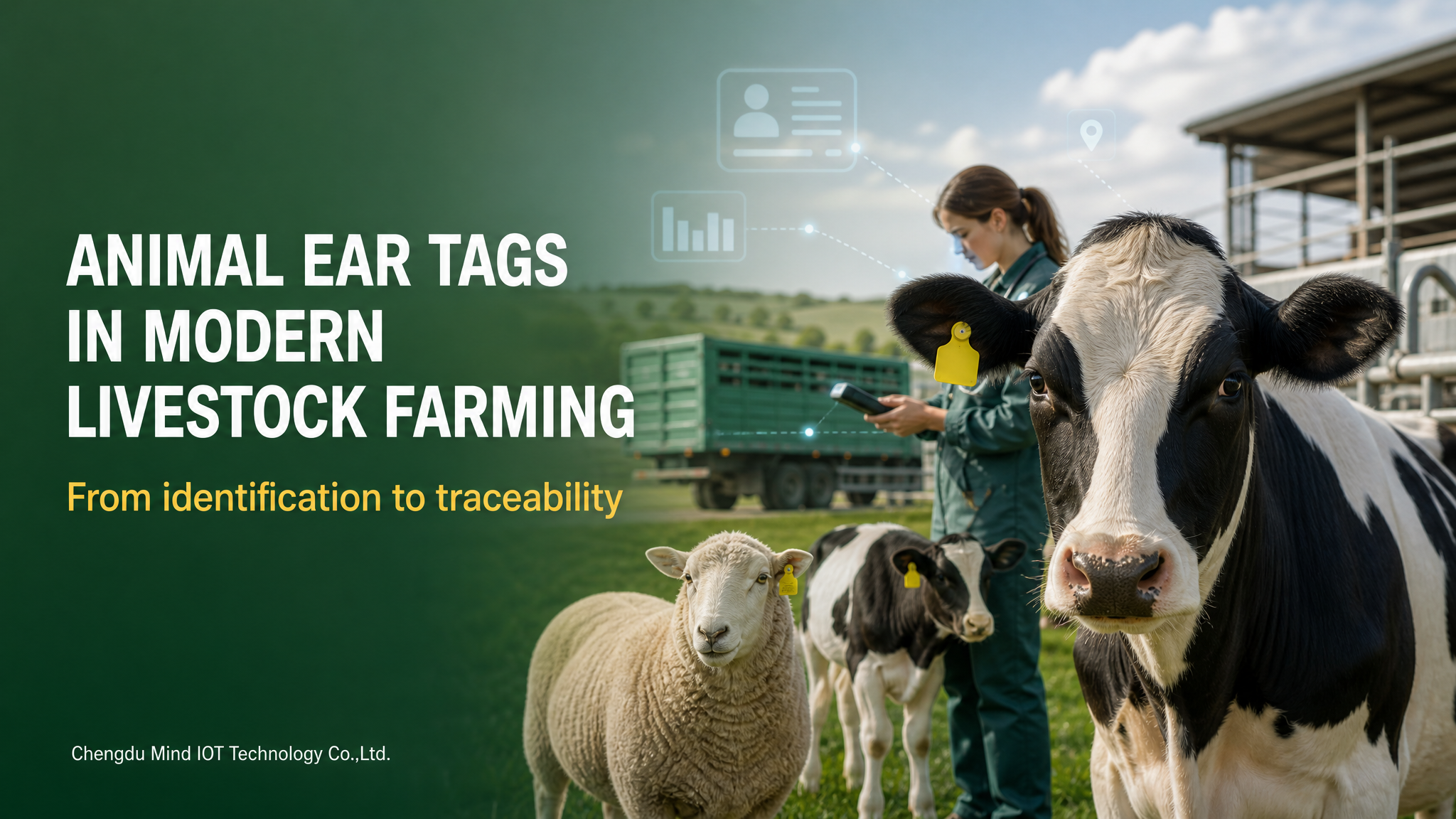
As livestock operations become more organized and information-driven, the role of an ear tag extends beyond a visible number. Depending on the management system, a tag may provide a physical identity that can be read, recorded and associated with an animal’s history. This helps turn daily observations and management actions into more consistent records.
Clear identity for every animal
Reliable identification is the foundation of livestock management. In a herd or flock, animals may look similar, move between areas or require attention at different times. A clearly marked ear tag gives each animal a distinct reference that can be checked during feeding, weighing, treatment, breeding or transfer.
Visual tags can support straightforward identification by farm personnel, while electronically readable tags can help connect an animal’s identity with digital records. The appropriate format depends on the species, the operating environment, the reading method and the farm’s record-keeping needs.
With a consistent identification process, managers can reduce confusion between animals and maintain a clearer history for each one. The tag itself is only one part of the system; its value grows when identification is linked to practical farm procedures and responsible data management.
Supporting day-to-day breeding management
Breeding programs rely on accurate records. Producers may need to distinguish animals by age, lineage, reproductive history, physical condition or current breeding status. Ear tags provide a practical way to associate these records with the correct animal during routine inspections and herd-management activities.
When a tag is checked before a breeding decision or a related management action, staff can refer to the animal’s established record instead of relying only on memory or handwritten notes. This can support more orderly planning and help reduce the risk of assigning an action to the wrong animal.
Breeding management remains dependent on professional judgment, appropriate farm procedures and the quality of the underlying records. Ear tags provide identification support; they do not replace veterinary or husbandry expertise.
Health and disease-prevention tracking
Health events often require timely and accurate records. Treatments, vaccinations, veterinary observations, quarantine status and follow-up actions may all need to be associated with a specific animal or group.
An animal ear tag can serve as the reference point for recording these events. During an inspection, a worker or veterinarian can confirm the animal’s identity and update the relevant record. In a larger operation, this can make it easier to review which animals have received attention, which require follow-up and which should remain separated from the main group under the farm’s health-management procedures.
During disease-prevention activities, reliable identification also supports clearer movement histories and more focused record review. The exact information captured and the way it is shared should follow applicable veterinary, farm-management and regulatory requirements.
More organized farm operations
Livestock management involves many recurring tasks: counting animals, assigning groups, recording weights, tracking locations, monitoring production activity and coordinating staff. Ear tags can help connect these tasks to the correct animal or group.
For example, when animals move between pasture, housing, treatment or feeding areas, their identities can be checked as part of the farm’s established workflow. This can help maintain more consistent records and make it easier to identify exceptions that require attention.
A well-designed identification process can also support communication between different members of a farming operation. When everyone uses the same identity reference, information is less likely to become fragmented between paper notes, spreadsheets and digital management systems.
Transport and movement records
Livestock may move between farms, markets, quarantine areas, processing facilities and other authorized locations. Transport requires careful coordination, including animal identification, loading records, destination information and movement documentation.
Ear tags help provide a visible or machine-readable reference during these handover points. Staff can use the identity associated with an animal to check records before movement, confirm the group being transported and update the destination or status within the relevant system.
Tags do not replace transport documents, veterinary checks or legal requirements. Instead, they can help make the identification step more consistent within those procedures, particularly when many animals are being handled in a limited period.
Building a stronger food-safety traceability chain
Food-safety traceability depends on the ability to connect information across stages of production and movement. Animal identification can contribute to this chain by linking an individual animal or managed group to relevant farm, health and transport records.
When information is recorded accurately and retained through the appropriate stages, traceability systems can help organizations review the origin and movement history of livestock. This can support more focused investigation when an issue is identified and improve coordination between producers, processors, distributors and other authorized parties.
Traceability is a shared process rather than a feature of the tag alone. It requires accurate data entry, clear responsibilities, suitable software and compliance with applicable requirements. Ear tags provide an important physical reference that helps connect those elements.
Choosing an ear-tag solution for the operating environment
The right ear-tag solution depends on the animal species, tag placement, durability requirements, identification method, reading environment and information workflow. Before deployment, livestock operators should consider how tags will be attached, how they will be read, how records will be maintained and how staff will use the information during everyday tasks.
A practical evaluation may also consider visibility, animal comfort, environmental exposure, cleaning and handling conditions, as well as compatibility with the farm’s existing processes. Starting with a clearly defined use case can help organizations select a solution that supports management objectives without adding unnecessary complexity.
Chengdu Mind IOT Technology Co.,Ltd. supports practical identification applications
Chengdu Mind IOT Technology Co.,Ltd. provides animal ear tag products and related identification solutions for livestock-management applications. The company’s role in this field is aligned with a practical objective: helping organizations connect physical animal identification with the records and workflows used in daily farming operations.
For livestock businesses assessing an identification project, a use-case-based approach can help clarify the required tag format, reading method, data process and management goals. This approach keeps attention on the operational needs of the farm, from individual animal identification and health records to movement control and traceability.
This release does not make claims about specific customers, production volumes, certifications, partnerships or project results.
Looking ahead
As modern livestock farming continues to place greater emphasis on animal health, operational coordination and supply-chain visibility, animal ear tags will remain a practical link between livestock and information. Their use can help farms identify animals more consistently, manage records more carefully and support traceability across authorized stages of production and transport.
The most effective applications will combine suitable ear-tag products with sound husbandry, veterinary oversight, responsible data practices and clearly defined operating procedures. In that context, a small tag can play a meaningful role in making livestock management more organized, accountable and connected.
About Chengdu Mind IOT Technology Co.,Ltd.
Chengdu Mind IOT Technology Co.,Ltd. provides animal ear tag products and related identification solutions for livestock-management applications. Further company information and media contact details may be added by the company before publication.
Post time: Oct-20-2026